
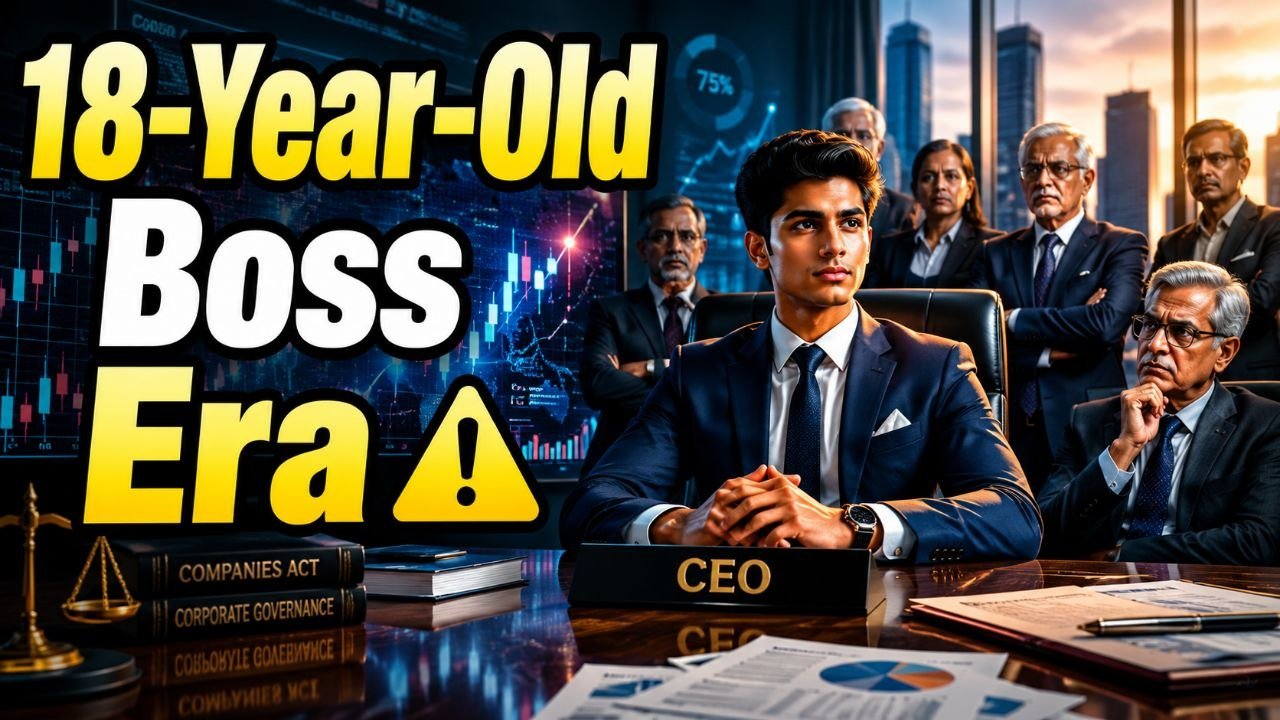
Gen Z का Boardroom Moment: 18 साल का Boss?

1. The Shift from Streets to Boardrooms
जंतर मंतर की भीड़ में खड़ा एक 18 साल का युवा सोचिए। हाथ में phone, आंखों में गुस्सा, और आवाज में वह confidence, जिसे पुराने सिस्टम ने अक्सर “बच्चों की बेचैनी” समझकर dismiss कर दिया।
लेकिन अब वही युवा सिर्फ सड़क पर नारा लगाने वाला चेहरा नहीं रह सकता। कल वही किसी बड़ी company के boardroom में बैठकर salary, strategy और investors से जुड़े फैसले ले सकता है।
सवाल डराने वाला भी है और curious भी। क्या India सच में उस मोड़ पर पहुंच गया है, जहां 18 साल का लड़का या लड़की company का Managing Director बन सकता है?
और अगर ऐसा हुआ, तो यह सिर्फ youth empowerment होगा, या corporate governance के लिए नया risk? यही वह सवाल है, जिसका जवाब इतनी जल्दी नहीं मिलेगा।
2. Legal Framework & Section 196 Anomaly
मौजूदा Companies Act के हिसाब से एक 18 साल का व्यक्ति company register कर सकता है, shares रख सकता है और director बन सकता है,
लेकिन Section 196 Managing Director और Whole-Time Director के लिए minimum age 21 साल रखता है।
यानी कानून कहता है, तुम company बना सकते हो, ownership ले सकते हो, board में बैठ सकते हो, लेकिन असली driver seat पर बैठने के लिए तीन साल और इंतजार करो।
3. The Parliamentary Recommendation Signal
अब यही पुरानी उलझन बदलने की तैयारी में है। Parliamentary committee ने recommendation दी है कि, Managing Director और Whole-Time Director की minimum age 21 से घटाकर 18 कर दी जाए।
यह अभी final law नहीं है, लेकिन signal बहुत बड़ा है। क्योंकि boardroom में age की दीवार अगर हिलती है, तो सिर्फ एक chair नहीं बदलेगी, power का पूरा imagination बदलेगा। Gen Z
आज की Gen Z वह generation है, जिसने internet को किताब की तरह नहीं, हवा की तरह इस्तेमाल किया है।
Part 2: Technology, Market Speed & Governance Dilemma
Digital Era Dynamics & Corporate Risk

1. Tech Fluency vs. Decades of Experience
AI, cyber security, gaming, creator economy और digital commerce उसके लिए separate subjects नहीं, daily language हैं।
Company boards के सामने आज सबसे बड़ा question यही है। क्या सिर्फ decades का experience काफी है, जब market हर महीने नया behavior दिखा रहा हो? Gen Z
Customers की बड़ी population 20 से 30 साल की उम्र में है। Employees भी young हैं। Brand का trust अब TV ad से नहीं, comment section, reels और community reaction से तय होता है।
एक wrong campaign, एक insensitive post, एक late response, और brand की सालों की reputation रातोंरात सवालों में आ सकती है। पुराने boardroom को यह speed कई बार देर से समझ आती है।
2. Accountability and Legal Weight of MD Role
लेकिन डर भी सच है। क्या 18 साल का व्यक्ति payroll, compliance, investors, debt, taxes और employees की responsibility समझ पाएगा? या excitement में company को risky decisions की तरफ ले जाएगा?
Startup ecosystem ने इस debate को तेज कर दिया है। आज कई founders college से पहले product बना रहे हैं, funding conversations कर रहे हैं, और लाखों users को handle कर रहे हैं।
लेकिन Managing Director कोई Instagram bio का title नहीं है। यह legal responsibility है। यहां signature का मतलब सिर्फ authority नहीं, accountability भी होता है।
MD company के decisions, disclosures, employees, creditors और regulators के सामने जवाबदेह होता है। एक गलत decision सिर्फ founder को नहीं, पूरी team और investors को प्रभावित कर सकता है।
3. Global Standards and Business Realities
इसलिए असली debate young versus old नहीं है। असली debate यह है कि opportunity और accountability को किस तरह balance किया जाए।
पुराना कानून उस समय बना था, जब business धीरे चलता था। आज apps रात में launch होते हैं, markets सुबह react करते हैं, और crisis दोपहर तक viral हो जाता है।
Family-owned businesses में यह बदलाव और interesting हो सकता है। कई promoter families next generation को early groom करती हैं, लेकिन legal limits कभी-कभी formal responsibility में delay पैदा करती हैं।
Venture-backed startups में भी young founders कई बार real decisions लेते हैं, लेकिन legal title किसी older person के पास रखा जाता है। इससे power और responsibility अलग-अलग जगह बंट जाती है।
Part 3: Market Credibility, Public Checks & Experience Gap
Beyond Laws: Market Acceptance & Governance

1. Ease of Doing Business & Global Benchmarks
अगर rule बदलता है, तो India ease of doing business की language में एक और signal देगा। कानून कहेगा, अगर तुम adult हो, तो responsibility से automatic बाहर नहीं हो।
Committee ने यह भी कहा कि US, Singapore, Germany और Australia जैसे देशों में top executive roles के लिए ऐसा 21-year barrier नहीं है। Economic Times ने इसे legal anomaly की तरह explain किया।
2. Guardrails, Market Discipline & Investor Trust
लेकिन boardroom कोई playground नहीं है। Chair मिलना और trust मिलना अलग चीजें हैं। Law permission दे सकता है, credibility market देता है।
किसी listed company में board approval, shareholder vote, disclosures, independent directors, audit committees और SEBI norms जैसे guardrails बने रहते हैं। उम्र घटने से ये checks गायब नहीं होंगे।
Reliance Industries में 28 साल के Anant Ambani की board appointment पर, proxy advisory firms ने age और experience को लेकर सवाल उठाए थे। Indian Express का example दिखाता है कि market age को blindly accept नहीं करता।
यानी 18 साल का रास्ता खुलना, automatic respect मिलना नहीं है। Investors पूछेंगे, track record क्या है, judgement कैसा है, और decision-making में maturity कितनी है?
3. Balancing Young Instincts with Senior Governance
Pattern interrupt यहीं है। Boardroom की असली power chair में नहीं, trust में होती है। और trust उम्र से नहीं, फैसले की quality से बनता है।
एक 18 साल का founder AI tools को senior executive से बेहतर समझ सकता है। लेकिन हो सकता है वह working capital cycle, tax notice या supplier credit की गंभीरता न समझता हो।
दूसरी तरफ 60 साल का executive balance sheet को गहराई से पढ़ सकता है, लेकिन Gen Z customer के meme-driven behavior को हल्के में ले सकता है।
Future शायद किसी एक side का नहीं होगा। Future उस combination का होगा जहां young instinct और experienced governance साथ बैठेंगे।
Part 4: Legal Reality vs. PR Optics
Structural Impact & PR vs. Real Power

1. Formal Recognition for Young Decision Makers
इस बदलाव का पहला असर startups, family businesses और consumer tech companies में दिख सकता है। जहां founder young है, वहां उसके role को legal clarity मिल सकती है। Gen Z
जो लड़का या लड़की अब तक unofficial decision-maker था, वह formally Managing Director बन सकेगा। इसका मतलब होगा, power के साथ नाम भी आएगा और नाम के साथ जवाबदेही भी।
Hidden truth यह है कि law अक्सर real economy से पीछे चलता है। पहले young people business बदलते हैं, फिर regulators उनकी reality को समझते हैं। Gen Z
오늘 young creators brands की sales बढ़ा सकते हैं, product boycott करवा सकते हैं, apps viral कर सकते हैं और comment section में company की पोल खोल सकते हैं।
अब corporate law शायद इसी youth-led economy को recognize करने की तरफ बढ़ रहा है। Street power धीरे-धीरे boardroom language बन रही है।
2. The Danger of Optics and Tokenism
लेकिन एक खतरा भी है। Companies कहीं 18-year-old faces को सिर्फ PR symbol बनाकर पेश न करें, जबकि असली power पुराने लोगों के पास ही रहे।
अगर young director सिर्फ photo में हो और decisions कोई और ले रहा हो, तो यह empowerment नहीं, optics होगा। और investors ऐसे optics को जल्दी पकड़ लेते हैं। Gen Z
Shareholding pattern, voting rights, board minutes, committee roles और remuneration structure सब बताएंगे कि young leader सच में power में है या सिर्फ poster पर है।
3. Impact on Education and Strategic Risks
Education system पर भी इसका असर पड़ सकता है। Incubators, business schools, coding communities और school-level entrepreneurship को अब ज्यादा serious तरीके से देखा जाएगा। Gen Z
Boardroom discussions में अब सिर्फ sales और margins नहीं होंगे। AI risk, data privacy, cyber attack, creator backlash और digital trust जैसे subjects भी central बनेंगे। Gen Z
यही वह जगह है जहां young perspective valuable हो सकता है। क्योंकि कई senior leaders इन risks को तब देखते हैं, जब damage already शुरू हो चुका होता है। Gen Z
Part 5: Fiduciary Discipline & Age-Neutral Reform
Capability, Compliance & Age Neutrality

1. Fiduciary Duty & Systemic Support
लेकिन young leader को भी fiduciary duty, conflict of interest, related party transactions, disclosure और compliance की भाषा सीखनी होगी। Talent को legal discipline चाहिए।
एक viral product company को famous बना सकता है, लेकिन एक compliance mistake उसे collapse भी कर सकती है। Business में speed जरूरी है, पर brakes भी जरूरी हैं।
इसीलिए strong mentors, experienced CFO, independent directors और real audit systems की जरूरत बढ़ेगी। Young leadership को support structure के बिना छोड़ना irresponsible होगा। Gen Z
Major turning point यही है। Age अब qualification भी नहीं मानी जानी चाहिए, और disqualification भी नहीं। असली सवाल capability का होना चाहिए। Gen Z
भारत में young people को अक्सर कहा जाता है, पहले बड़े हो जाओ, फिर जिम्मेदारी लेना। यह recommendation पहली बार कहती है, अगर जिम्मेदारी उठा सकते हो, तो prove करो। Gen Z
2. Sector-Specific Nuances and Shareholder Safety
Gaming, fintech, digital media, D2C brands और consumer tech जैसी industries में यह बदलाव सबसे ज्यादा relevant लगेगा। क्योंकि वहां customer behavior young minds बेहतर पढ़ सकते हैं।
Imagine कीजिए, एक 18-year-old gaming founder अपने users की psychology senior consultant से बेहतर समझता है। लेकिन revenue model, legal risk और investor reporting के लिए उसे mature system चाहिए। Gen Z
Regulated sectors में फिर भी extra approvals और qualifications लग सकते हैं। Banking, insurance या financial services जैसी जगहों पर सिर्फ Companies Act बदलना काफी नहीं होगा। Gen Z
Public shareholders की protection सबसे जरूरी रहेगी। अगर age reduction governance के बिना आती है, तो यह bold reform नहीं, dangerous shortcut बन सकती है।
3. Age-Neutral Shift: From 18 to 75 Years
दिलचस्प बात यह है कि committee ने maximum age 70 से बढ़ाकर 75 करने की भी recommendation दी है। यानी यह सिर्फ youth takeover की story नहीं है।
यह reform age boundary से capability boundary की तरफ shift जैसा है। Law शायद कह रहा है, young हो या senior, automatic block कम होने चाहिए।
इसलिए कहानी का deeper meaning यह है कि India boardroom को age-neutral बनाना चाहता है। जहां competence, accountability और shareholder trust असली test बनें।
Part 6: The Ultimate Verdict & Call to Action
The Future of Indian Corporate Leadership

1. From Streets to Boardroom Chairs
जंतर मंतर से boardroom तक की यह journey symbolic है। जो generation public spaces में अपनी आवाज दिखा रही थी, वही अब institutions के अंदर जगह मांग रही है।
कल तक companies Gen Z को सिर्फ customer segment मानती थीं। अब वही Gen Z product strategy, hiring culture, brand tone और digital future पर decision-maker बन सकती है।
Older generation का डर है कि discipline टूट जाएगा। Young generation का डर है कि system उन्हें हमेशा immature मानकर gate के बाहर ही रोक देगा।
इन दोनों fears का answer law नहीं, execution देगा। Transparent appointment, real qualification, clear role और accountable reporting ही इस reform को meaningful बनाएंगे।
2. Measuring Leadership Beyond Birth Years
अगर यह बदलाव final law बनता है, तो पहली headline शायद यही होगी कि 18 साल का youth company boss बन सकता है।
लेकिन deeper headline कुछ और होगी। India test कर रहा होगा कि leadership को birth year से मापा जाए या value creation से।
Company सिर्फ young energy से नहीं चलती। और company सिर्फ old experience से भी future नहीं जीतती। दोनों को एक ही table पर बैठना पड़ेगा।
Boardroom की chair अब एक silent question पूछेगी। तुम young हो या senior, इससे पहले बताओ, क्या तुम इस responsibility का वजन उठा सकते हो?
शायद 18 साल का MD पुराने directors को replace नहीं करेगा। शायद वह उन्हें यह याद दिलाएगा कि future बाहर खड़ा इंतजार नहीं कर रहा, वह already अंदर आ चुका है। Gen Z
और यही इस कहानी का payoff है। Gen Z का असली जलवा सिर्फ protest में नहीं, power संभालने की maturity में दिखेगा, क्योंकि अब सवाल age का नहीं, जवाबदेही का है। Gen Z
3. Outro & Call to Action
सोचिए, वही Gen Z जिसने सड़क पर अपनी आवाज से सिस्टम को हिला दिया, अब कंपनी के boardroom के दरवाजे पर खड़ी है। डर यह है कि सालों पुरानी corporate कुर्सी अब उम्र नहीं, skill से तय हो सकती है। शायद 18 साल का MD पुराने directors को replace नहीं करेगा। शायद वह उन्हें यह याद दिलाएगा कि future बाहर खड़ा इंतजार नहीं कर रहा, वह already अंदर आ चुका है। Gen Z
मौजूदा Companies Act में 18 साल का युवा कंपनी बना सकता है, shares खरीद सकता है, director भी बन सकता है। लेकिन Managing Director या Whole-time Director बनने के लिए उम्र 21 साल चाहिए। Gen Z
अब एक संसदीय समिति ने सुझाव दिया है कि यह सीमा 21 से घटाकर 18 साल कर दी जाए। सवाल है, अगर युवा legally adult है, तो उसे leadership से रोका क्यों जाए? Gen Z
AI, cyber security, data analytics, gaming, fintech और digital commerce की दुनिया में young talent कई बार पुराने अनुभव से भी तेज सोचता है।
लेकिन असली मोड़ यहीं है: क्या सिर्फ उम्र घटने से boardroom बदल जाएगा, या investors फिर भी experience और credibility को ही परखेंगे? पूरी सच्चाई जानने के लिए discription में दिए लिंक पर क्लिक कर अभी पूरी वीडियो देखें।!
अगर हमारे आर्टिकल ने आपको कुछ नया सिखाया हो, तो इसे शेयर करना न भूलें, ताकि यह महत्वपूर्ण जानकारी और लोगों तक पहुँच सके। आपके सुझाव और सवाल हमारे लिए बेहद अहम हैं, इसलिए उन्हें कमेंट सेक्शन में जरूर साझा करें। आपकी प्रतिक्रियाएं हमें बेहतर बनाने में मदद करती हैं।
GRT Business विभिन्न समाचार एजेंसियों, जनमत और सार्वजनिक स्रोतों से जानकारी लेकर आपके लिए सटीक और सत्यापित कंटेंट प्रस्तुत करने का प्रयास करता है। हालांकि, किसी भी त्रुटि या विवाद के लिए हम जिम्मेदार नहीं हैं। हमारा उद्देश्य आपके ज्ञान को बढ़ाना और आपको सही तथ्यों से अवगत कराना है।
अधिक जानकारी के लिए आप हमारे GRT Business Youtube चैनल पर भी विजिट कर सकते हैं।
धन्यवाद!