
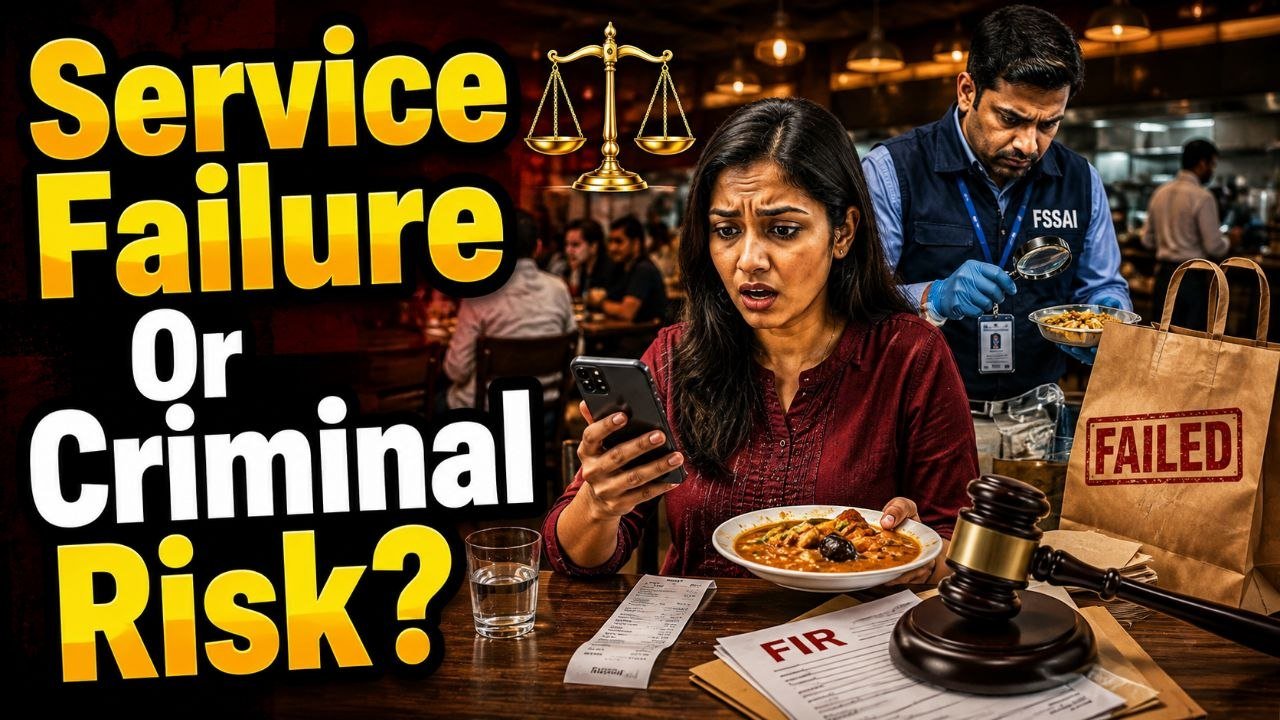
#1. खराब खाना और ग्राहक का अधिकार: Criminal Risk का परिचय
खराब खाना सिर्फ Bad Service नहीं, Criminal Risk भी बन सकताहै।
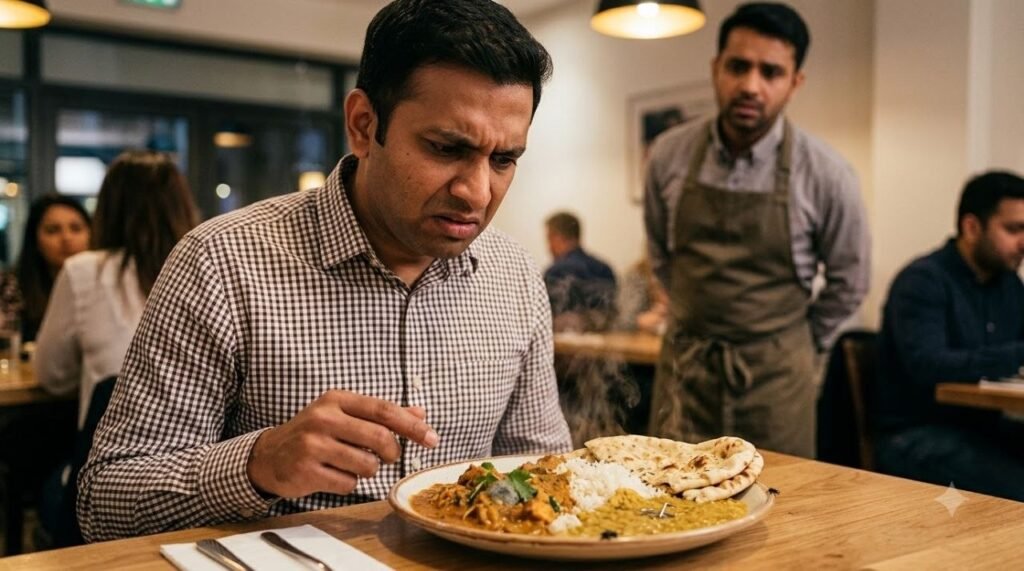
आप एक restaurant में बैठे हैं। सामने गरमागरम खाना आने वाला है। waiter plate रखता है, आप पहला bite लेनेही वाले होते हैं, और अचानक आपकीनजर plate के एक कोनेपर जाती है।
वहां कुछ ऐसा दिखता है, जिसे देखकर appetite नहीं, गुस्सा और डर दोनोंआ जाते हैं। कभी बासी smell, कभी fungus, कभी insect, कभी food में foreign object।
ज्यादातर लोग ऐसे moment पर क्या करतेहैं? Manager को बुलाते हैं,थोड़ी बहस होती है, bill कम हो जाताहै, या कभी restaurant कहदेता है—“Sir, sorry, replace कर देते हैं।”
कानूनी नजरिया: क्या यह सिर्फ एक खराब Experience है?
लेकिन असली सवाल यहां शुरू होता है। क्या खराब खाना सिर्फ एक खराब experience है, याकानून की नजर मेंयह आपकी health के साथ खिलवाड़है?
और अगर उस खाने से food poisoning हो जाए, hospital जाना पड़े, या कोई serious injury हो जाए,तो restaurant owner को सिर्फ refund देनापड़ेगा, या jail भी हो सकतीहै?
यही वह कहानी हैजो हर बाहर खानाखाने वाले इंसान को समझनी चाहिए।क्योंकि restaurant की plate में गलती छोटी दिख सकती है, लेकिन कानून में उसका असर बहुत बड़ा हो सकता है।
अगर आपको ऐसी consumer rights वाली practical stories पसंद हैं, तो video को like कर दीजिए। आजबात करते हैं कि खराब खानामिलने पर आपका legal right क्या है,और restaurant की real liability कहां तक जा सकतीहै।
Food Safety और Consumer Rights के दो अलग Tracks
सबसे पहले एक simple scene समझिए। आप family के साथ restaurant गए। Soup आया, dosa आया, sandwich आया, या online delivery से खाना आया। Taste खराब है, smell अजीब है, या food में fungus जैसा कुछ दिख रहा है। आप complaint करते हैं, लेकिन staff बात को हल्का करदेता है।
कई बार customer शर्म या जल्दी मेंबात वहीं खत्म कर देता है।सोचता है—छोड़ो, ₹300 से ₹500 की बात है, क्या लड़ना।
लेकिन कानून इसे सिर्फ पैसे की बात नहींमानता। Food safety में सबसे बड़ा मुद्दा bill नहीं, health risk है। क्योंकि खराब खाना सिर्फ खराब taste नहीं देता। वह infection, vomiting, stomach pain, fever, allergy और serious food poisoning तकले जा सकता है।
यहीं consumer का पहला right आताहै। Safe और quality food मिलना आपका legal right है, कोई favor नहीं।
भारत में इस तरह केमामलों में दो tracks साथ-साथ चल सकते हैं।पहला, Consumer Courtवाला track, जहां आप refund, compensation और litigation cost मांग सकते हैं। दूसरा, Food Safety law वाला track, जहां restaurant या food business operator पर penalty, prosecution और serious cases में jail तक हो सकती है।
#2. Consumer Court vs FSSAI: Substandard और Unsafe Food में अंतर

अब यहां confusion मत रखिए। Consumer Court और FSSAI एकही चीज नहीं हैं। दोनों का role अलग है।
Consumer Court यहदेखता है कि service में deficiency थी या unfair trade practice हुई। यानी customer को जो quality promise की गईथी, क्या वह मिली?
FSSAI और Food Safety authorities यहदेखते हैं कि food unsafe, substandard, contaminated या unhygienic था या नहीं।
मतलब एक plate से दो सवालनिकलते हैं। Customer को नुकसान हुआक्या? और public health rule टूटा क्या?
Real Consumer Cases और Service Deficiency
Bengaluru जैसे शहरों में ऐसे consumer cases ने लोगों कोफिर remind कराया है कि, restaurant मेंखराब खाना मिलने पर customer helpless नहीं है।
Reports में ऐसे मामले आए हैं जहां restaurant या delivery platform को stale, wrong या unsafe food के लिए liable माना गया और compensation देने का order हुआ।
लेकिन यहां एक बात साफरखनी जरूरी है। हर खराब taste वालाखाना court में criminal case नहीं बनता।
अगर खाना सिर्फ cold, tasteless या promised quality से कम है,तो यह service deficiency हो सकती है।लेकिन jail वाला मामला तब मजबूत होताहै जब food unsafe साबित हो।
FSSAI Act 2006: Substandard बनाम Unsafe Food
Unsafe food का मतलब है ऐसा खानाजो health को नुकसान पहुंचासकता है। जैसे contamination, toxic element, harmful bacteria, fungus, insect याऐसा foreign matter जिससे बीमारी हो सकती है।
Food Safety and Standards Act, 2006 मेंइस फर्क को बहुत important मानागया है। Substandard food और unsafe food दोनों अलग categories हैं।
Substandard food में quality कम हो सकती है।यानी food prescribed standard match नहीं करता। इसके लिए India Code Section 51 में penalty up to ₹5 lakh तक हो सकतीहै।
लेकिन unsafe foodज्यादा serious है। India Code Section 59 कहता है कि अगर unsafe food बेचा गया, तो punishment injury के level के हिसाब सेबढ़ती है।
#3. कानूनी सजा के प्रावधान और Proof जुटाने का सही तरीका
अगर unsafe food से कोई injury नहींहुई, तो jail up to 6 months और fine up to ₹1 lakh तक हो सकताहै।
अगर non-grievous injury हुई, जैसे normal food poisoningया medical discomfort, तो jail up to 1 year और fine up to ₹3 lakh तक हो सकता है।
अगर grievous injury हुई, यानी serious harm, तो jail up to 6 years और fine up to ₹5 lakh तक जा सकताहै।
और अगर खराब खाने से death हो जाए, तो punishment minimum 7 years से life imprisonment तकहो सकती है, और fine minimum ₹10 lakh होता है।
“Sorry Sir” से Jail तक: Proof की कानूनी अहमियत
अब जरा सोचिए। जिस गलती को restaurant counter पर “sorry sir” बोलकर खत्म किया जा रहा था,वही गलती health damage होने पर criminal liability बन सकती है।
लेकिन कानून में एक बड़ा catch है।सिर्फ बोलने से case मजबूत नहीं होता। Proof चाहिए।
अगर आप कहें कि food खराब था, restaurant कहे कि नहीं था,तो court evidence देखेगा। Photo, video, bill, medical report, complaint record—येसब game बदलते हैं।
यही वजह है कि जागरूक customer और गुस्से में बहस करने वाले customer में फर्क होता है। बहस momentary satisfactionदेती है, evidence legal strength देता है।
खराब खाना मिलने पर क्या करें? Step-by-Step Guide
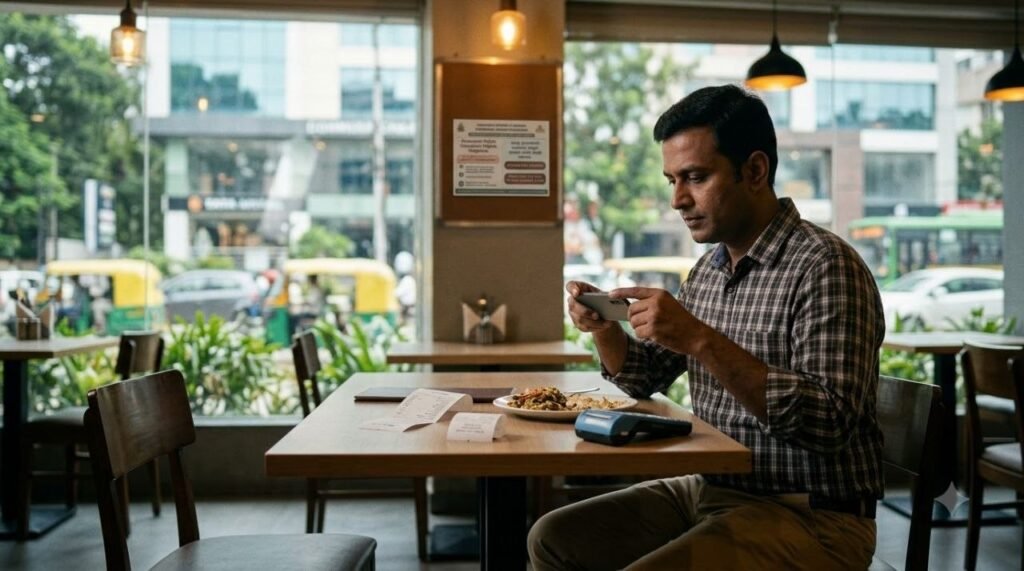
अगर plate में insect है, fungus है, या smell खराब है, तो सबसे पहले clear photo और video record करें। Food item, bill, restaurant name, date, time, table या delivery packaging—सब frame मेंआ सके तो बेहतर है।
कई लोग गुस्से में food फेंक देते हैं। लेकिन अगर मामला serious है, तो sample preserve करना helpful हो सकता है,क्योंकि authority आगे testing कर सकती है।
दूसरा काम, bill संभालकर रखें। बिना bill के restaurant कह सकता हैकि आपने वहां खाना खाया ही नहीं। Online delivery में digital invoice, order ID, chat support screenshot और delivery packaging भी evidence बनसकते हैं।
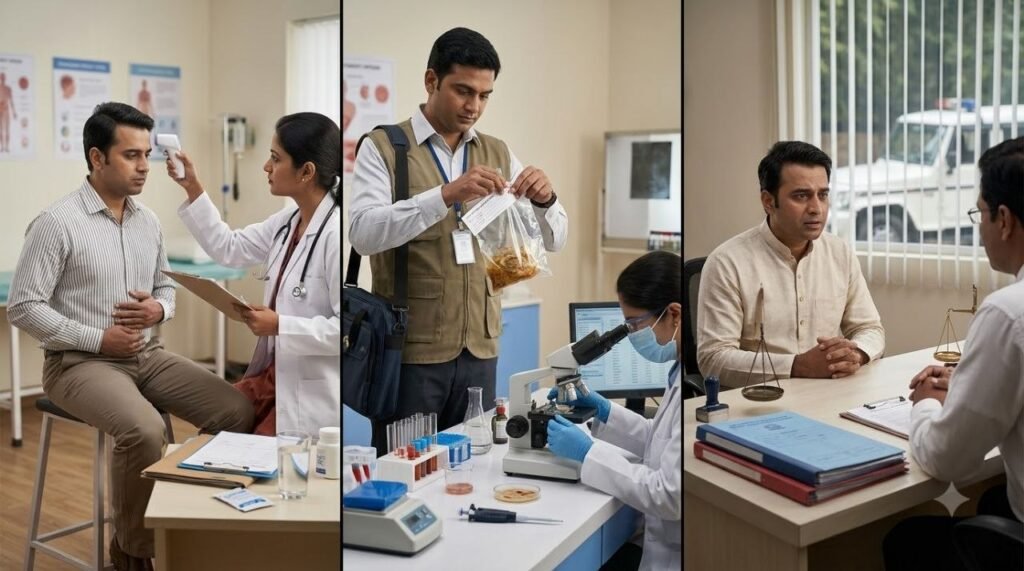
तीसरा, अगर खाना खाने के बाद health issue हुआ है,तो doctor के पास जाएं। Medical prescription और medicine bill बहुत important proof बनतेहैं। क्योंकि court को यह link देखनाहोता है कि खराब food और बीमारी के बीच connection हैया नहीं।
#4. Consumer Protection Act 2019, Delivery Apps और Law Balance
अब यहां एक सवाल viewer केलिए है। अगर restaurant गलती मानकर सिर्फ नया खाना दे दे, तोक्या आपको बात वहीं खत्म कर देनी चाहिए?
अगर कोई health issue नहीं हुआ, और मामला minor है,तो कई लोग replacement या refund लेकर satisfied हो सकते हैं।
लेकिन अगर restaurant ने बदसलूकी की, bill forcefully लिया, health risk था, या repeated negligence दिखी, तो complaint करना public interest भी बन जाताहै। क्योंकि आज आपकी plate में problem आई है, कल किसी बच्चे,बुजुर्ग या patient की plate में आ सकती है।
Consumer Protection Act 2019 और Product Liability
Consumer Protection Act, 2019 ने customer के rights को और मजबूतकिया है। इसमें product liability जैसी व्यवस्था भी है, जहां defective product या deficient service सेनुकसान होने पर compensation मांगा जा सकता है।
Food delivery platforms का angle भी important है। अगर Swiggy, Zomato या किसी app सेखराब food आया, तो सिर्फ restaurant ही नहीं, platform की role और response भी सवालों मेंआ सकता है।
लेकिन platform की liability facts पर depend करेगी। Order किसने fulfill किया, complaint पर response क्या था, refund कैसे handle हुआ, और negligence किस level पर थी। मतलब हर case में result same नहीं होगा। Court facts, evidence और damage देखकर decide करेगा।
Customer vs Restaurant Owner: निष्पक्ष कानूनी दृष्टिकोण
अब restaurant owner की तरफ से भी एक side समझिए। कभी customer complaint genuine होती है, कभी false या exaggerated भी हो सकतीहै।
इसीलिए law evidence मांगता है। Food safety officer sample लेता है, lab report आती है, फिर unsafe या substandard का legal conclusion निकलता है।
यह balance इसलिए जरूरी है, ताकि genuine customers को justice मिले और businesses पर fake claims का pressure न बने।
लेकिन restaurantsके लिए message साफ है। Food business सिर्फ taste का business नहीं, trust का business है। Kitchen hygiene, ingredient storage, expiry date, staff training, pest control, temperature control—येसब luxury नहीं, legal responsibilityहैं।
अगर एक restaurant stale food serve करता है, तो वह सिर्फ brand reputation lose नहींकरता। वह license, penalty और prosecution risk भी invite करता है।
#5. Complaint दर्ज कराने का Practical Roadmap और Legal Action Levels
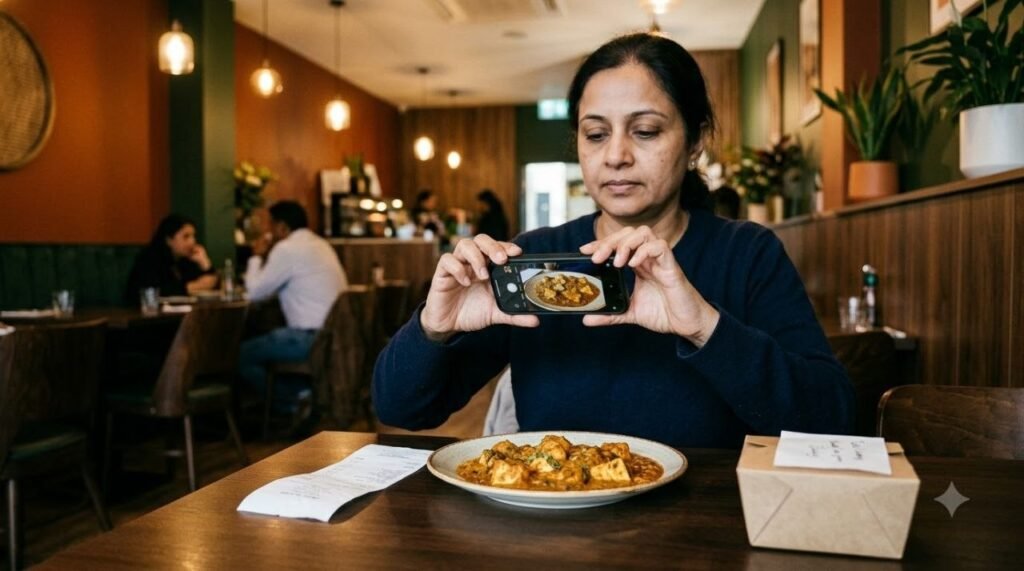
अब consumer के लिए practical roadmap समझिए। पहला step emotional नहीं, documentary होना चाहिए।
Photo लो। Video लो। Bill बचाओ। Staff से written complaint या acknowledgement लेने की कोशिश करो।
अगर online delivery है, तो app पर तुरंत complaint raise करो और chat screenshot रखो।
अगर health issue हुआ है, तो doctor report लो। सिर्फ “पेट दर्द हुआ” बोलने से case weak रहेगा, medical evidence case को गंभीर बनाता है।
NCH, Consumer Commission और FSSAI में शिकायत कैसे करें
इसके बाद आप National Consumer Helpline पर complaint कर सकते हैं। Official NCH portal पर toll-free number 1915 दिया गया है, और NCH app/web portal से grievance register हो सकती है।
अगर matter consumer compensation काहै, तो आगे Consumer Commission में complaint file की जा सकतीहै।
आज e-Daakhil और consumer grievance systems की वजह से process पहले से ज्यादा accessible हुआ है,हालांकि serious cases में legal advice लेना बेहतर होता है।
Food safety concern केलिए FSSAI या state food safety department में भी complaint की जा सकतीहै। यहां authority का role सिर्फ आपका refund दिलाना नहीं, food business की inspection, sample testing और enforcement भी हो सकता है।
कार्रवाई के 3 Levels: Refund से लेकर Jail तक
अब बड़ी बात समझिए। Restaurant में खराब खाना मिलने पर तीन levels बनतेहैं।
पहला, refund या replacement। यह simple service recovery है।
दूसरा, compensation। अगर mental agony, inconvenience या health issue हुआ है, तो Consumer Court compensation दे सकता है।
तीसरा, penalty या jail। यह तबआता है जब food safety law के हिसाबसे serious violation prove हो।
यानी हर complaint jail तक नहीं जाएगी,लेकिन हर complaint को हल्का भीनहीं लिया जा सकता।
यही balance script का सबसे important point है। Customer को डराकर नहीं, aware करके बोलना है। आपको यह पता होनाचाहिए कि खराब खानामिलने पर आपकी fight सिर्फ waiter से नहीं है। आपके पास law, commission और regulator तक जाने कारास्ता है।
#6. निष्कर्ष: जागरूकता, जिम्मेदारियां और Bangalore Real Case Study
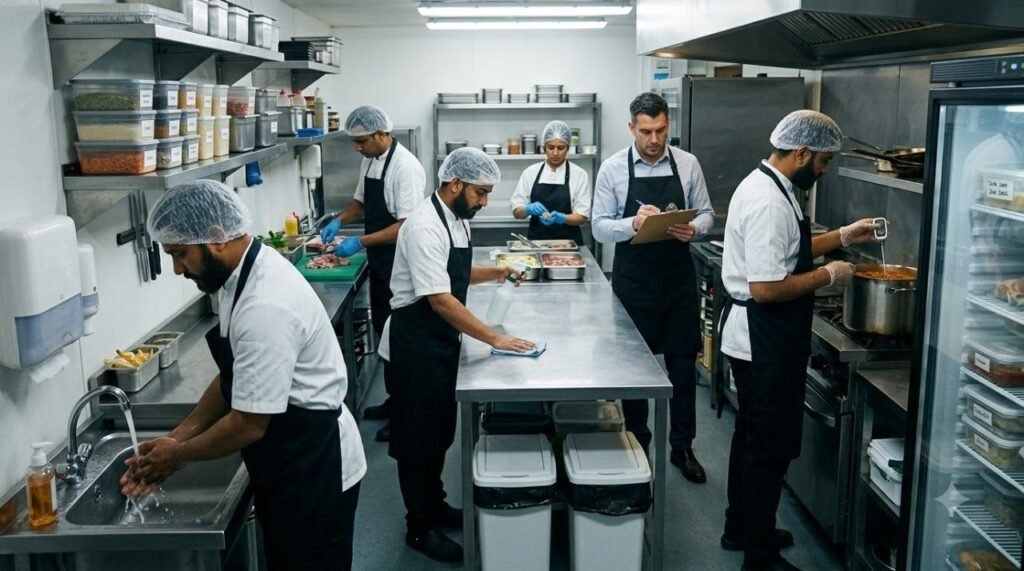
Restaurant owners कोभी यह समझना होगाकि “चलता है” वाला attitude अब dangerous है।
आज हर customer के हाथ में camera है। हर bill digital trail बन सकता है।हर bad experience consumer forum तक जा सकता है। और social media की वजह से reputation loss legal penalty सेभी तेज फैल सकता है।
लेकिन customers को भी responsible रहनाहोगा। Fake complaint, edited photo, या exaggeration करना उल्टा नुकसान कर सकता है। क्योंकि law genuine harm को protect करता है, drama को reward नहीं करता।
कानूनी सजा का पूरा निचोड़ (Summary)
अब शुरुआत वाले सवाल पर लौटते हैं।खराब खाना परोसने पर restaurant owner को कितनी सजाहो सकती है?
साफ जवाब यह है—मामलाकितना serious है, यह तय करेगा।
Simple deficiency में refund और compensation हो सकता है।
Substandard food में penalty up to ₹5 lakh तकजा सकती है।
Unsafe food में injury न होने पर भी jail up to 6 months और fine up to ₹1 lakh तक हो सकताहै।
Injury बढ़े तो punishment 1 year, 6 years, और death caseमें 7 years से life imprisonment तक पहुंच सकतीहै।
लेकिन यह सब automatic नहींहोता। Evidence, lab testing, medical proof और authority की कार्रवाई से case बनता है।
इसलिए अगली बार अगर restaurant में खराब food मिले, तो सिर्फ गुस्सामत कीजिए। Smart बनिए। क्योंकि एक photo, एक bill और एक medical report आपकी पूरी legal position बदल सकते हैं।
और restaurant industry के लिए यह warning है। Customer सिर्फ taste नहीं खरीद रहा। वह safety, hygiene और trust खरीद रहा है। Plate में आई लापरवाही सिर्फएक customer को नहीं, पूरी brand credibility कोबीमार कर सकती है।
अब आप बताइए—अगर restaurant खराब खाना देकर सिर्फ “sorry” बोले, तो क्या इतनाकाफी होना चाहिए, या ऐसे cases में strict penalty mandatory होनीचाहिए? Comment में अपनी राय लिखिए। ऐसी practical legal और consumer rights storiesके लिए channel subscribe कर लीजिए।
Case Study और Video Outro (Call to Action)
कल्पना कीजिए, restaurant में plate आती है… और उसमें बासी, fungus लगा या कीड़े वालाखाना निकल जाए। ज्यादातर लोग गुस्सा होकर bill कम करवाते हैं,लेकिन असली कहानी कानून में छिपी है।
बेंगलुरु के एक मामलेमें customer को खराब खानापरोसा गया। शिकायत करने पर staff ने गलती माननेके बजाय बदसलूकी की और पूरा bill भी वसूल लिया।
लेकिन customer चुप नहीं बैठा। उसने food की photo, bill receipt और food poisoning की medical पर्ची के साथ District Consumer Commission का दरवाजा खटखटाया।
Forum ने इसे service में गंभीर लापरवाही माना। Restaurant को bill ब्याज सहित लौटाने, ₹50,000 compensation और ₹10,000 litigation cost देनेका आदेश हुआ।
और twist यहीं है। FSSAI Act में खराब खाना ₹5 लाख जुर्माने से लेकर 6 साल jail तक पहुंच सकता है, और serious case में सजा और भी भारीहो सकती है। पूरी सच्चाई जानने के लिए discription में दिएलिंक पर क्लिक करअभी पूरी वीडियो देखें।!
अगर हमारे आर्टिकल ने आपको कुछ नया सिखाया हो, तो इसे शेयर करना न भूलें, ताकि यह महत्वपूर्ण जानकारी और लोगों तक पहुँच सके। आपके सुझाव और सवाल हमारे लिए बेहद अहम हैं, इसलिए उन्हें कमेंट सेक्शन में जरूर साझा करें। आपकी प्रतिक्रियाएं हमें बेहतर बनाने में मदद करती हैं।
GRT Business विभिन्न समाचार एजेंसियों, जनमत और सार्वजनिक स्रोतों से जानकारी लेकर आपके लिए सटीक और सत्यापित कंटेंट प्रस्तुत करने का प्रयास करता है। हालांकि, किसी भी त्रुटि या विवाद के लिए हम जिम्मेदार नहीं हैं। हमारा उद्देश्य आपके ज्ञान को बढ़ाना और आपको सही तथ्यों से अवगत कराना है।
अधिक जानकारी के लिए आप हमारे GRT Business Youtube चैनल पर भी विजिट कर सकते हैं।
धन्यवाद!